Unfortunately, I did not catch a photo of this completed one before I shipped it off to charity. I loved making it – the pattern is well written and easy to follow. I plan to make more and will remember to get a finished photo next time. I did color control on the sleeves a bit, which was a pain because of the extra ends to weave in. The yarn was Caron faerie cake with G and H hooks. Planning a combo of solid colors for the next one. There was a matching baby hat you can see on my recent Loom items post. The pattern is available here and also on Ravelry where you can see other folks finished versions. https://www.knitpicks.com/patty-cake-crocheted-cardi/p/55661
This is another keeper pattern. Crochet Cakes Baby Poncho by Crochet Crowd. I changed the main pattern stitch to back loop only double crochet, otherwise kept to their instructions. I’d seen a cute photo in a Facebook crochet group of one a grandma had made for her grandchild and had to try it. Another where the final photo was not captured as mine have wooden buttons on either side for finishing. The green is Caron One Pound Mint Green with Red Heart Super Saver Reef. The beige is a collection of mostly discontinued Jiffy print and solid yarns (Camel and Camel Spray plus one un-identified fuzzy yarn). J hook gave me larger toddler size ponchos.
These knit up pretty fast. I want to try them with larger needles and a chunkier yarn. The 4 weight Caron One Pound (Mint Green) with a 5 needle is a bit dense – which makes them not feel soft – and these are newborn size, might even be preemie. I used a stockinette instead of garter stitch for the main part.
I’m currently working a few more fast cowls but plan to get brack to more baby items soon. So, do follow the blog if it is something you want to see. I talk a bit about charities that accept hand made items and how best to ship them in my earlier blanket post https://ceodraiocht.wordpress.com/2021/12/22/catching-up/ .
Another item I made some progress this year on was hats for charity – whipped up on my handy round looms.
Baby Hats made on the red Knifty Knitter (the chunky yarn ones) and the Alimelt red looms. I’ve done the folded brim but prefer letting the rolled edge be for baby hats.Alimelt green loom, Lion Brand Pound of Love Oxford Grey, Single Crochet BLO rows for edgeLooms
Above is a selection of looms. You can see how the Alimelt yellow compares to the Knifty Knitter yellow with so many more pegs to allow knitting with a single strand of worsted weight. The long wood loom is from KnittingBoard.com, plus you see a small sock loom.
Alimelt green loom, Jiffy discontinued yarn (bulky so this hat is a bit bigger) Single Crochet BLO around edge
I did experiment with various methods I’d seen on YouTube for reducing the stitches at the top for rows before bind off, but really didn’t care for them at all. I’m much happier with just doing my best to tighten the bind off and stitch the top together.
I’d also picked up an inexpensive sock loom a bit back and have used it to make fingerless gloves.
Pound of Love Cherry, the thumb is added using a few rounds of decreasing crochet. I also prefer a crochet bind off.Knit 2 Purl 2 gives way to e-wrap stockinetteI prefer a crochet cast on (many YouTube videos show how)Caron Simply Soft Yarn Iris. These small looms are a bit more finicky to use although for the e-wrap stitch once uou get your rhythm going it’s clear sailing.By going back and forth to make the opening for the thumb, rather than the continuous round of the arm piece, you get that pattern. I’ve considered doing that part in a different color to call it out. (the color is washed out on this photo, Iris really is that deep bright purple).I label (size and yarn content) and place all items for charity in plastic bags. The yellow and green hat was knot on a Knifty Knitter loom with discontinued Deborah Norville yarn. The baby hat towards the top was done on an Alimelt loom with discontinued Jiffy Baby yarn.
For charity knitting I’m pretty set on acrylic yarn. It is so easy care and I can’t imagine saddling the less fortunate with a wool item they can’t wash and dry when they have the opportunity. Most refugee areas bring in washers and dryers on trucks (I’ve seen it here after fires) and I doubt anyone in such a situation would pull out a hat that needs special care – so they end up with basically a pot holder. There is misinformation that wool is warmer – sorry, we don’t oil wool anymore as they used to do for fishermen – so it collects water and moisture, takes forever to dry and isn’t a bit warmer as the old wives tale perpetuated by sellers of fancy wool would have you believe – all that on top of needing special care. There is now some pricey washable wool, but I hear the chemical process to get it there is not exactly earth friendly (it is believed that approximately 70% of all wool labeled as fully machine-washable is treated by the chlorine-Hercoset process, a polymer applied to the wool. see https://www.ncbi.nlm.nih.gov/pmc/articles/PMC6369147/ on the U.S. National Institute of Health website).
I’m going to do a bit of a push and see if I can get caught up posting a few of my 2021 projects before the new year. I’ve been crocheting, knitting and looming items to send to the Pine Ridge and Rosebud reservations in South Dakota. They are the poorest place in the United States and, in winter, in desperate need of warm items. Every now and again I also work in something for a friend, relative or my own home.
Brights – M hook and Lion Brand Pound of Love Oxford Grey with Red Heart Super Saver Favorite Stripes, starting chain 90 to have 88 stitches
If you would like to do some charity crafting yourself, be sure to check out the Sew for Kids website https://sewforkids.wordpress.com . It lists needs and addresses to send items to under the How You Can Help tab – just click a listed reservation charity to browse its needs. Also check out Give Back Box http://givebackbox.com . They have worked with large companies to develop a program where you can ship items to charities at a significantly reduced UPS rate. At the bottom of the post there is more info on using Give Back Box.
Beige tones is a combo of Jiffy, Homespun ROCOCO, Pound of Love Antique and another discontinued yarn – starting chain 88, M hook.
I’ll start my catch up with my favorite chunky crochet blanket. It’s a Back Loop only double crochet and I’ve worked it both in 2 strands of 4 weight (worsted weight yarn) with an M crochet hook and one strand of 4 weight with one strand of sport weight and a J crochet hook. I started making it when Rescued Paw Designs was a website – she’s changed her name but the pattern and post are the same if you’d like to reference her starting chain and yarn yardage
Peachy – Lion Brand Pound of Love White with a with discontinued Red Heart Baby Sport Pompadour, J hook, starting chain 127.
The BLO DBL crochet makes an excellent squishy and very warm fabric that I just love. I change the hook size to match my yarn combo. There are all different starting chain amounts as I thought her recommended chain for a twin size was narrower than I’d like after doing the first one. Some are bed blankets and others large lap blankets. For a twin – I targeted 103 to 106 rows. I often didn’t nab good photos of the finished blankets – everything here – except my current in process Brights – has been finished. Some are for family, some donated.
Lighter Peachy – Lion Brand Pound of Love Antique White with discontinued Red Heart Baby Sport Pompadour variegated. I’d made it a bit narrower (not as much discontinued yarn) then added 6 rows of a single crochet BLO border in Pound of Love Creamsicle to make it larger. J hook
Obviously I love this blanket!
Baby Colors – J hook and discontinued Lion Brand Jiffy Print Daytona with discontinued Jiffy White, J hook. Added the single crochet BLO border to increase the blanket size (9 rows). Made to use as toddler / child size blanket.
Minty – Lion Brand Pound of Love Oxford Grey with discontinued Red Heart Baby Sport Pompadour Solids pastel green, J hook, Chain 124 to start.Fall colors is multiples of Jiffy (el paso, caffe, grass green, taupe, red) with Lion Brand Pound of Love Antique – starting chain 84, M hook.Grey and blue is discontinued Caron Dazzleaire Dark celestial blue and Pound of Love oxford gray. It’s a bit more blue and grey than the photos show – starting chain 88, M hook.Blue tones is Homespun Regency and Lion Brand Pound of Love Antique – starting chain 80, M hook.
GiveBackBox has UPS labels so you can send in kind donations to send to registered 501C3 orgs for free (if you don’t choose the charity and just wish to donate a box and let the site choose the closest charity to you accepting donations) or for just US$15.00, you can ship up to a 70 pound box to a charity you choose. There is currently a snag with the choosing charity bit where the program always prints the same tracking number. When you get your first email confirmation you need to send it back to info@givebackbox.com and ask for a new label with a unique tracking number to be sent to you and ignore the first label. It’s worth this extra step. Many of us have been successfully using this program throughout the year with the shipping savings enabling people to give so much more.
Oh gosh, I have not been keeping up the blog nor using it as a Garden Journal per my last wonderful plan. So, I’ll play a bit of catchup with a few pictures of my winter blooming bulbs.
It is beyond time for me to update my garden notes here. So I’ll start with everyone’s favorite veggie to grow, tomatoes.
First my excuses – in February it REALLY looked like we were going to have a horrid drought year so I didn’t start my seed as I normally do planning to just skip growing vegetables. Then, we had enough rain in March and April that I changed my mind but started everything MUCH later than normal. So, this year everything is a tad behind.
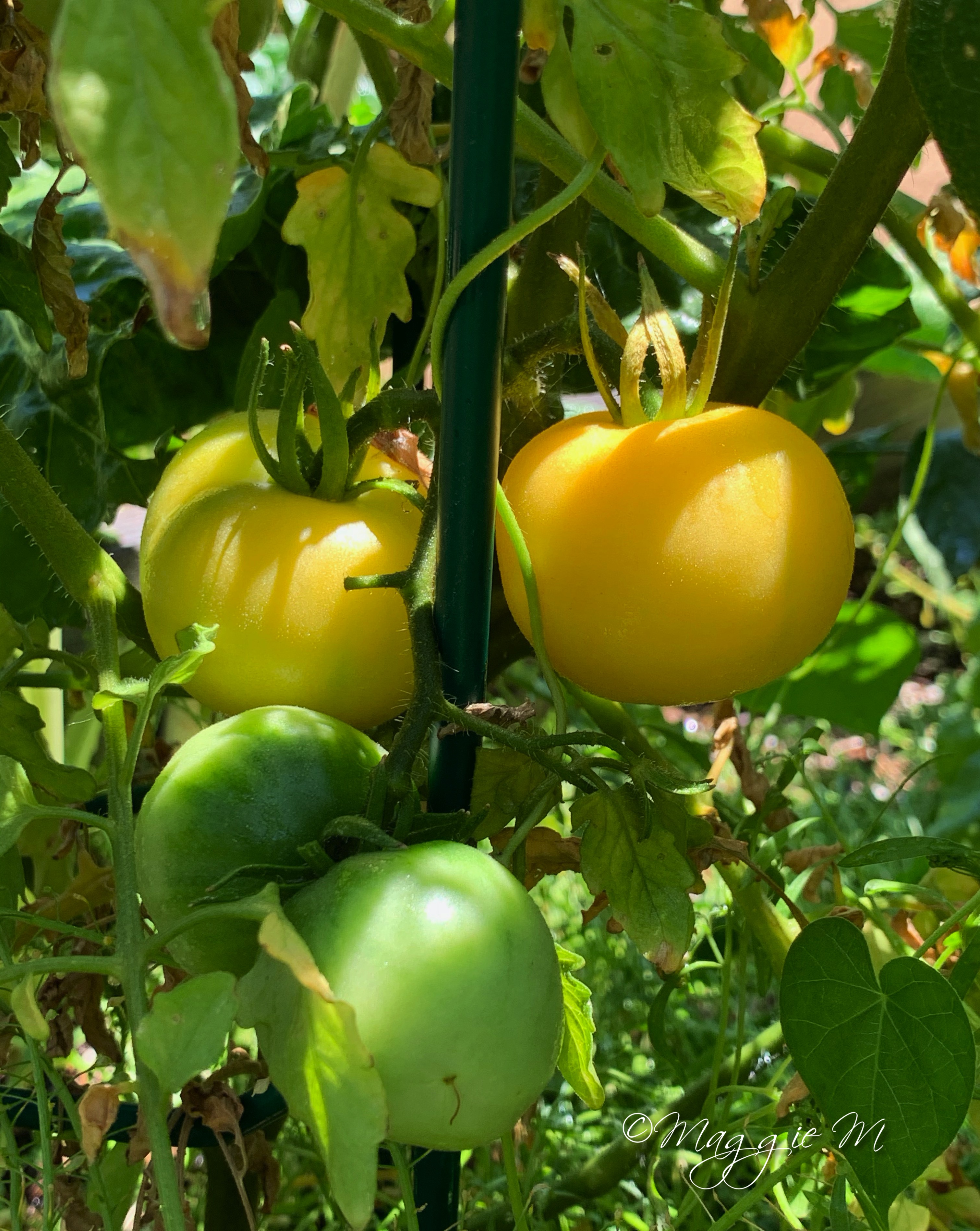
Peach Wapsipinicon heirloom tomato is something I’ve been growing for more than a few years now. It has slightly fuzzy skin – just fuzzy enough to be different but not so much as to be gross or weird. Slightly sweet, it’s a mid-size yellow that I enjoy.
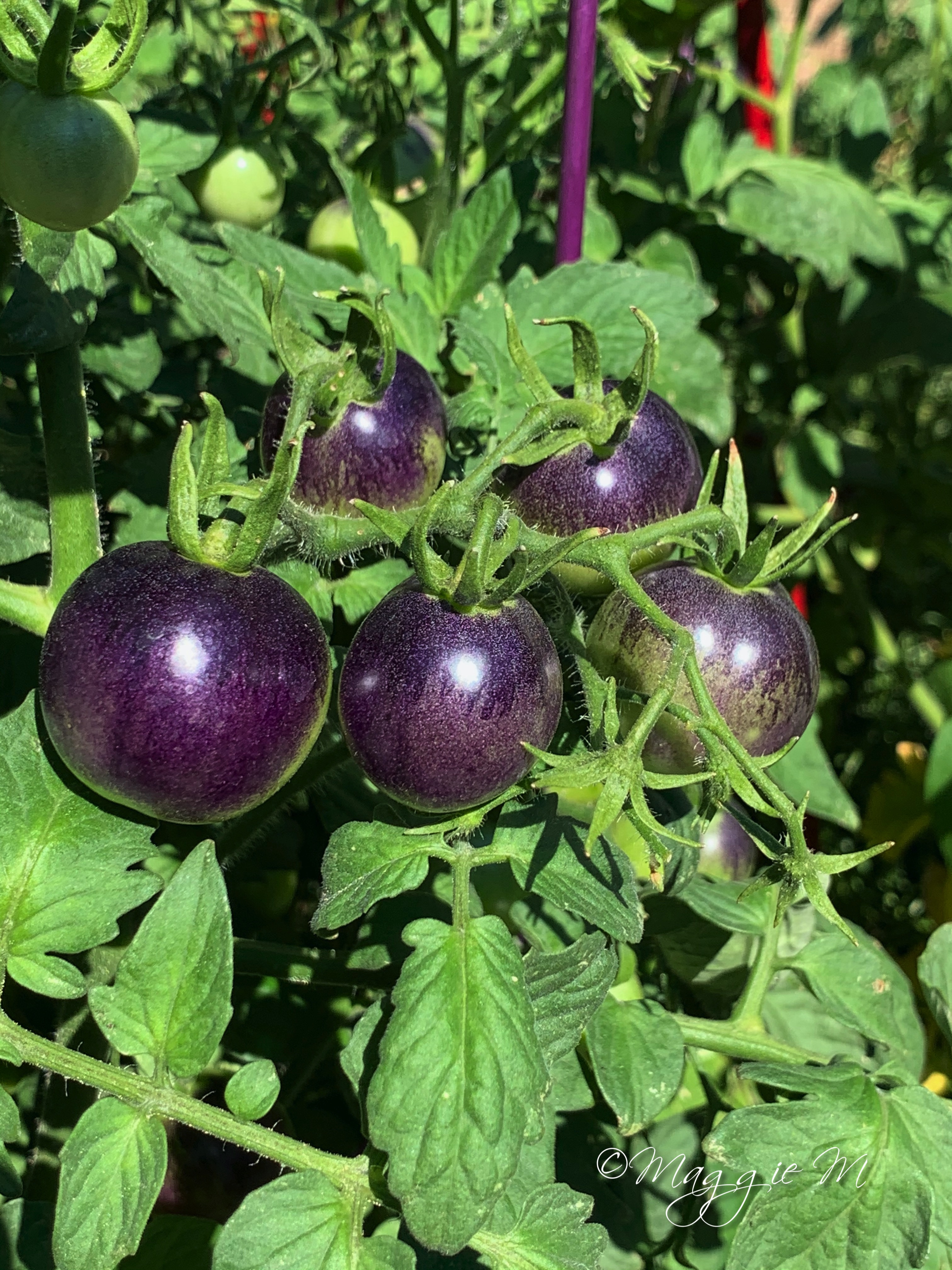
An experiment this year is Indigo Rose Tomato. Haven’t yet had the opportunity to try it as you’re not supposed to harvest them if there’s any green at all on them. They turn the deep purple first, but until the little bit of the green on the bottom turns pink leave them on the vine. Indigo Rose is one of the blue tomatoes bred to produce high levels of antioxidants. So far, it looks extremely prolific. “Indigo Rose” was bred at Oregon State University. I’ll mention this as some may jump to conclusions about breeding “The new tomato is released as an open pollinated variety, and as such, seed saved from self-pollinated plants will grow true and not produce hybrids. It’s also important to know that genetic engineering techniques are never used to develop these lines”.
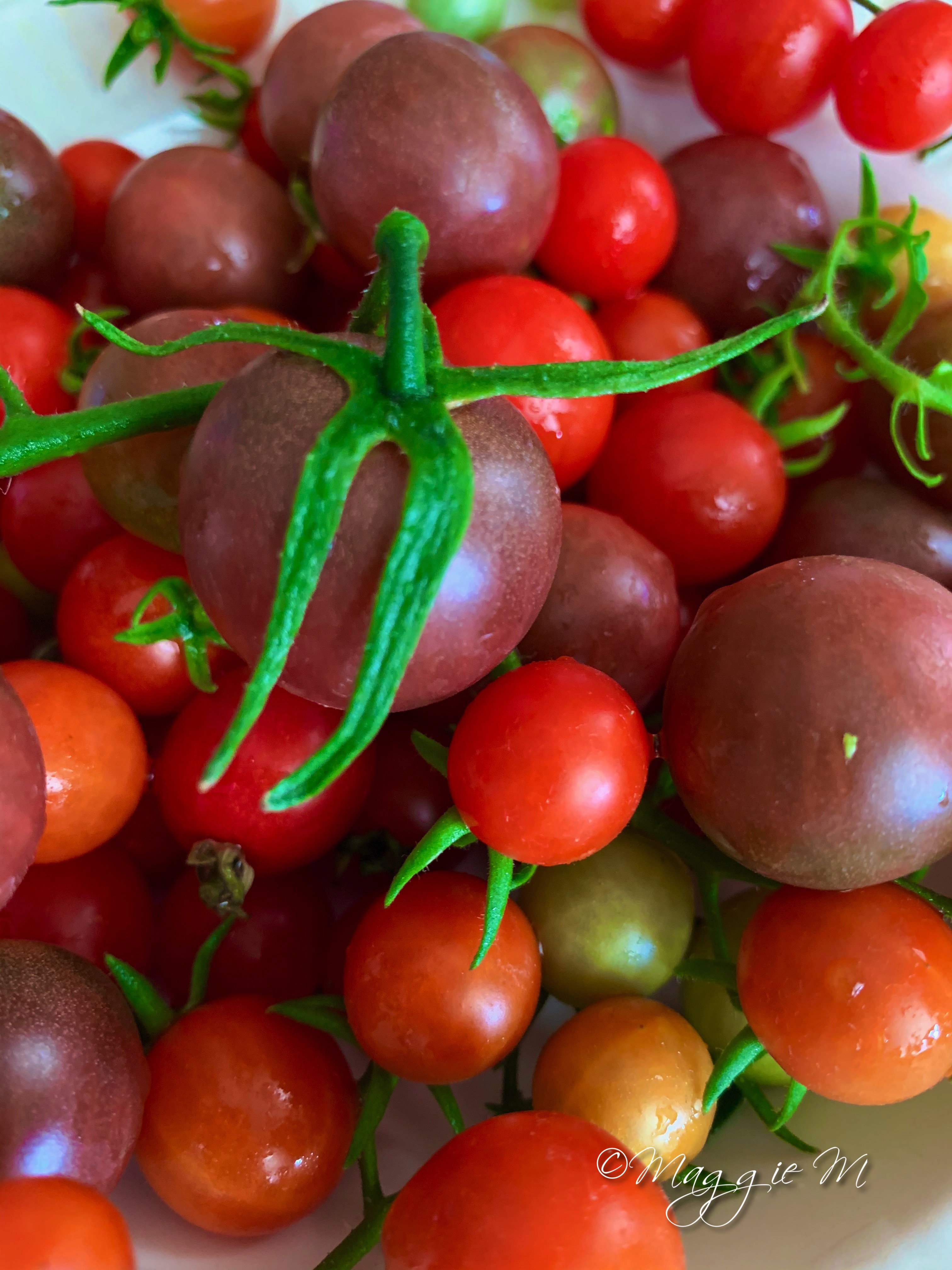
Heirloom Chocolate Cherry is the big one is the above picture, if I’d left them on the vine another day it would have gotten a tad darker it’s considered a purple tomato and sweet. I love that it’s large – so easy to harvest. I don’t care how sweet they are, I just can’t go for the tiny cherries as they are such a pain to collect. Chocolate Cherry is also prolific here – a bit plus for me.
Peacevine (bred to be an open pollinated Sweet 100 Cherry Tomato. Peacevine is reported to be very high in GABA, a sedating neurotransmitter, thus Peace in the name. I always loved Sweet 100 but it became harder and harder to find. I’m delighted Dr. Alan Kapular of Peace Seeds took the years it takes to stabilize and produce this open pollinated variety from the hybrid.
I have a few others, but having started late they’re just coming in. More on them soon.
Well, I had been putting up posts of knitting and crocheting. But I haven’t shared any beading or jewelry posts in eons. So, here we go. Jewelry for crafting.
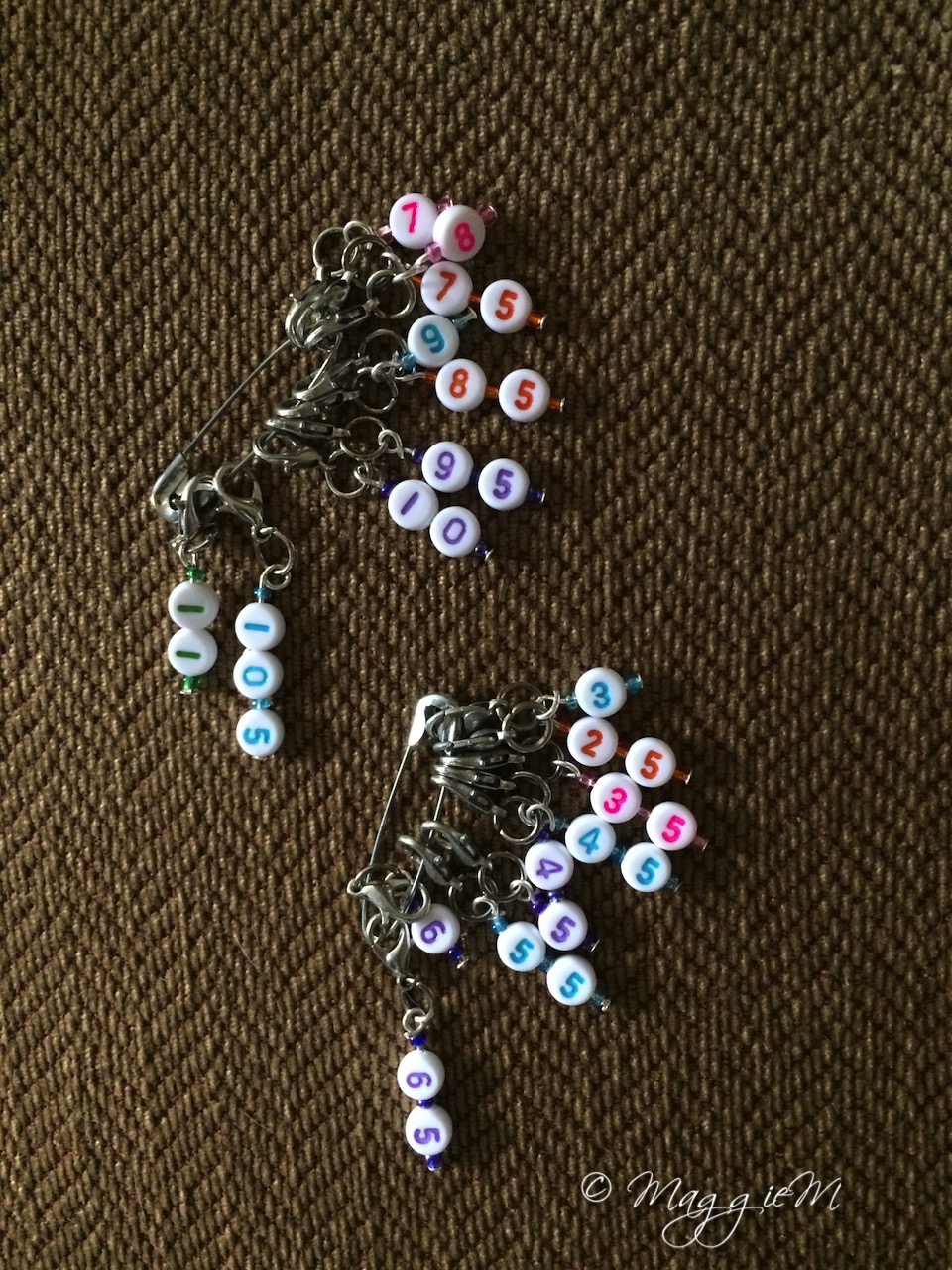
People who knit and crochet need to keep track of a few things, what size needle or hook they’re using on that project, what row they are on, certain special stitches (for instance ‘increase here’) and in some cases quite simply which is the front side. This can be accomplished often by using a piece of colored yarn or safety pin and keeping tick marks or notes of your projects. A fun little luxury are the beaded markers.
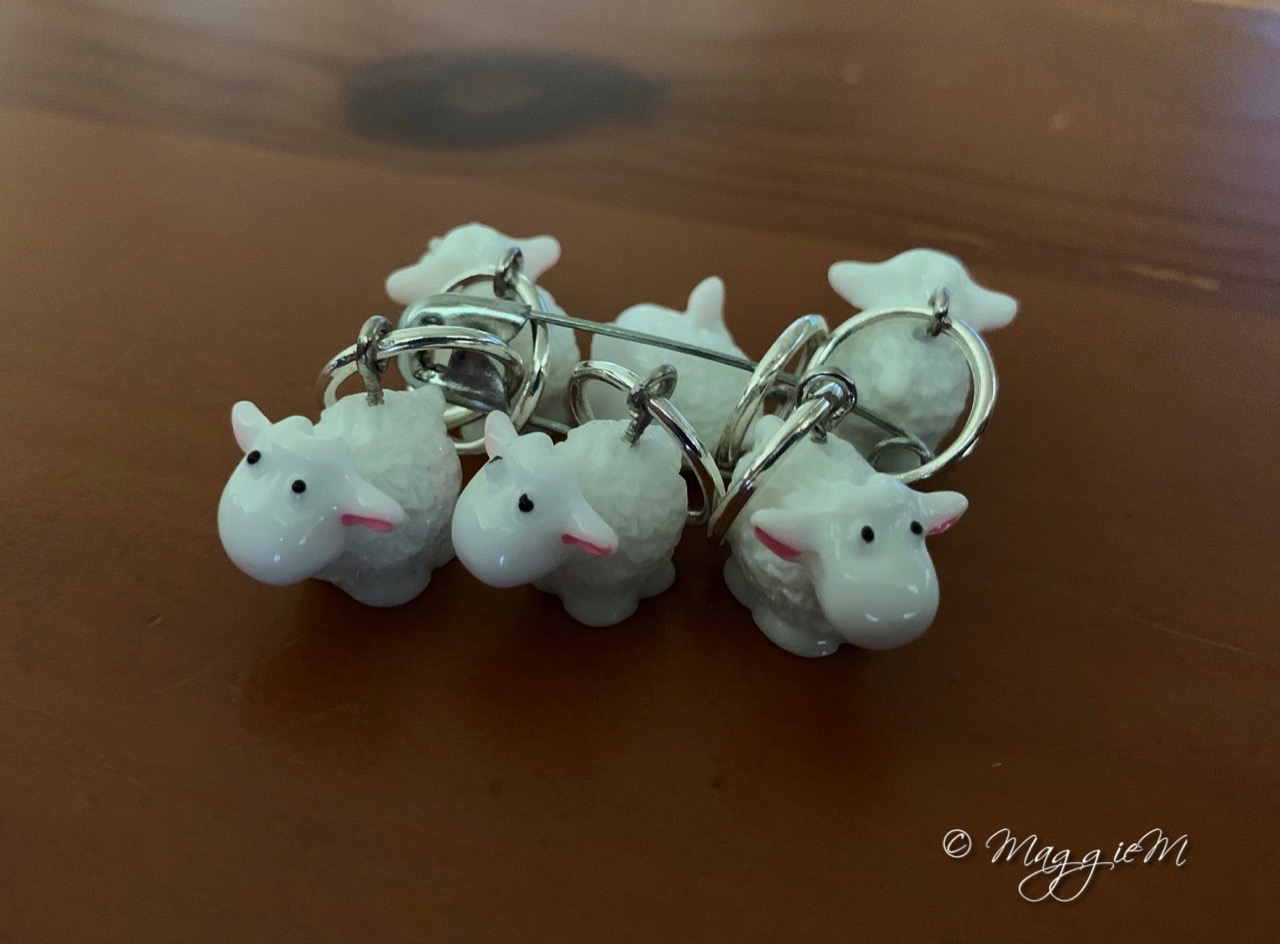
The little plastic lambs were an inexpensive find at AliExpress. They’re light, so no added weight when using them for my knitting needles or loom. I used 10mm rings to fit over my loom hooks as well as work for knitting projects. Didn’t want split rings – the yarn might snag on those. I found Soldered Closed Jump Rings at AliExpress as well. And, La Voila – markers. So, if my pattern were 5 knits and a purl, 5 knits and a purl and so forth, I’d just mark the purl stitches and not have to count.
By using the mm measure for the hooks and needles, I only need the one set to work for both crochet hooks and knitting needles. A bead = a decimal point (so 5.5mm = size I crochet hook or 9 Knitting needle). The small lobster claw at the top lets it hook onto any project.
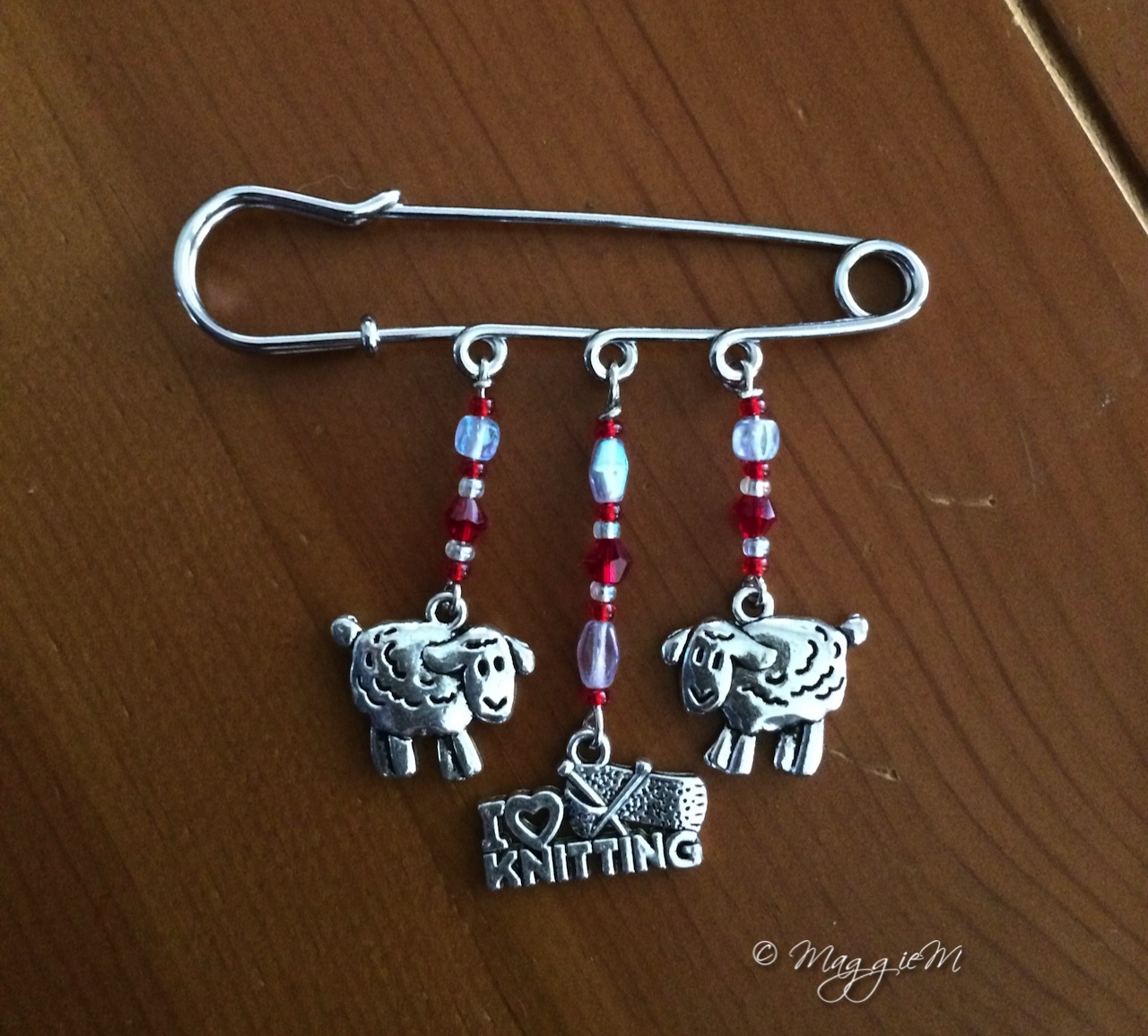
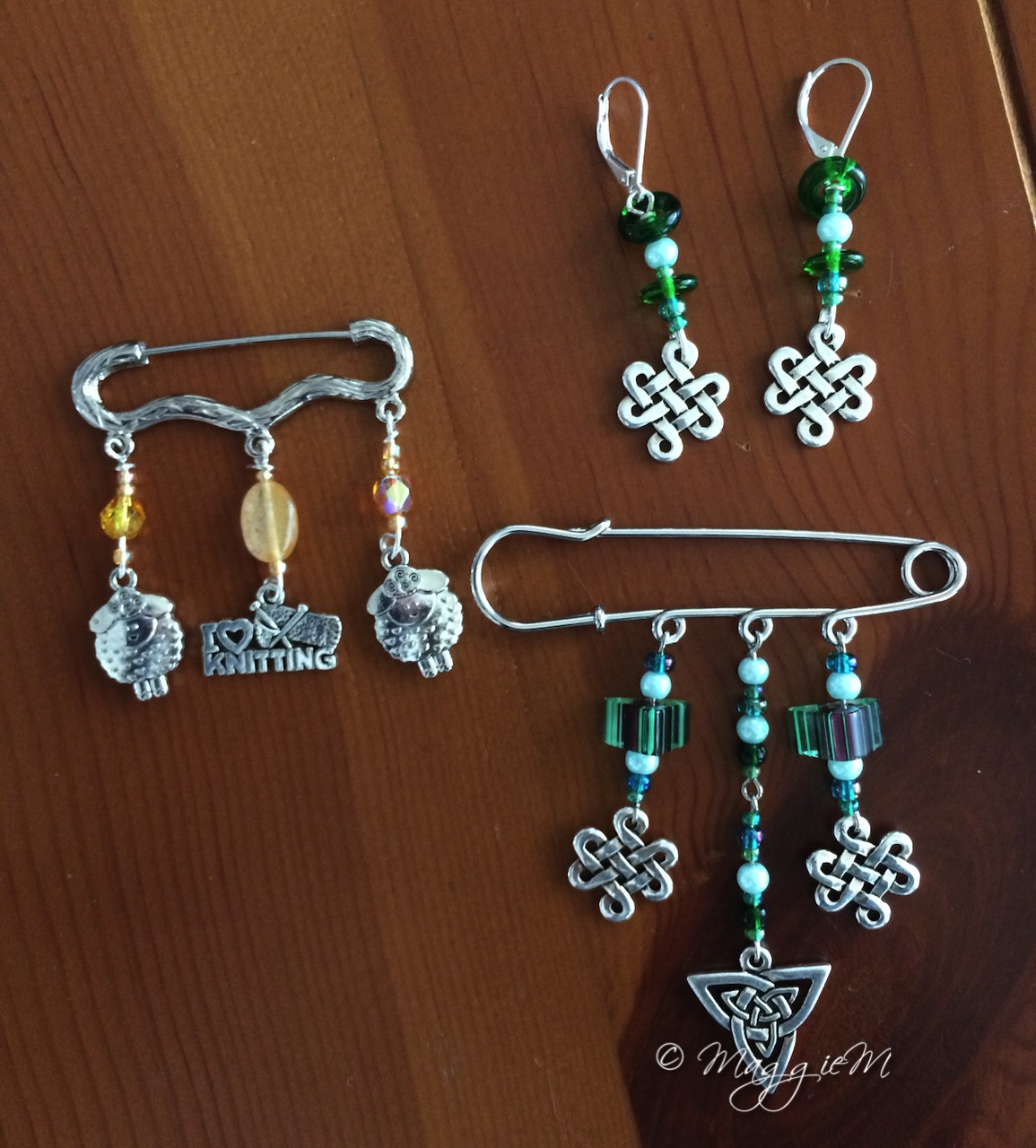
Perhaps I got carried away when shopping for beads to use, but these are fun and a great to keep a shawl closed. I find shawl construction so much easier than sweaters, you don’t have to worry about the pattern sizing (they’re never just right) and they’re more relaxing for me to work on. I work the Safety pin/Kilt pin brooch between the stitches when I fasten it – no wear and tear on the handmade shawl.
Bit of a fan of Celtic knotwork here, so had to make myself an Irish set. The branch gold Love Knitting is too small a pin to keep a warm shawl closed – can be worn on any number of things, but not a worsted weight shawl. Hmn, thought I’d shared some shawls here and see that I didn’t – next post up is needlework.
It’s that time of year to lust over the seed catalogs and plan your upcoming garden. I like to start more of what works really well here, and often add a few new things to try.
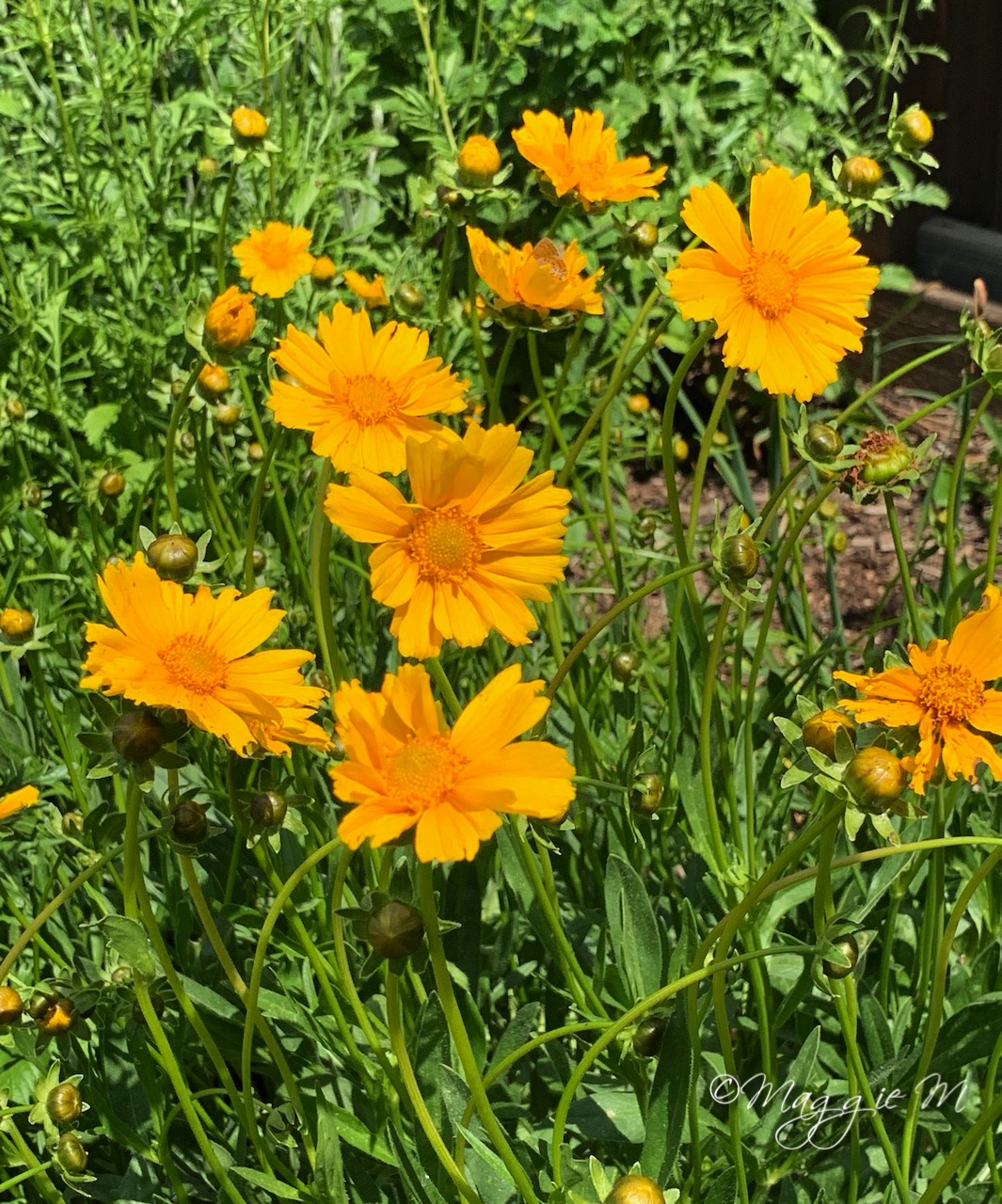
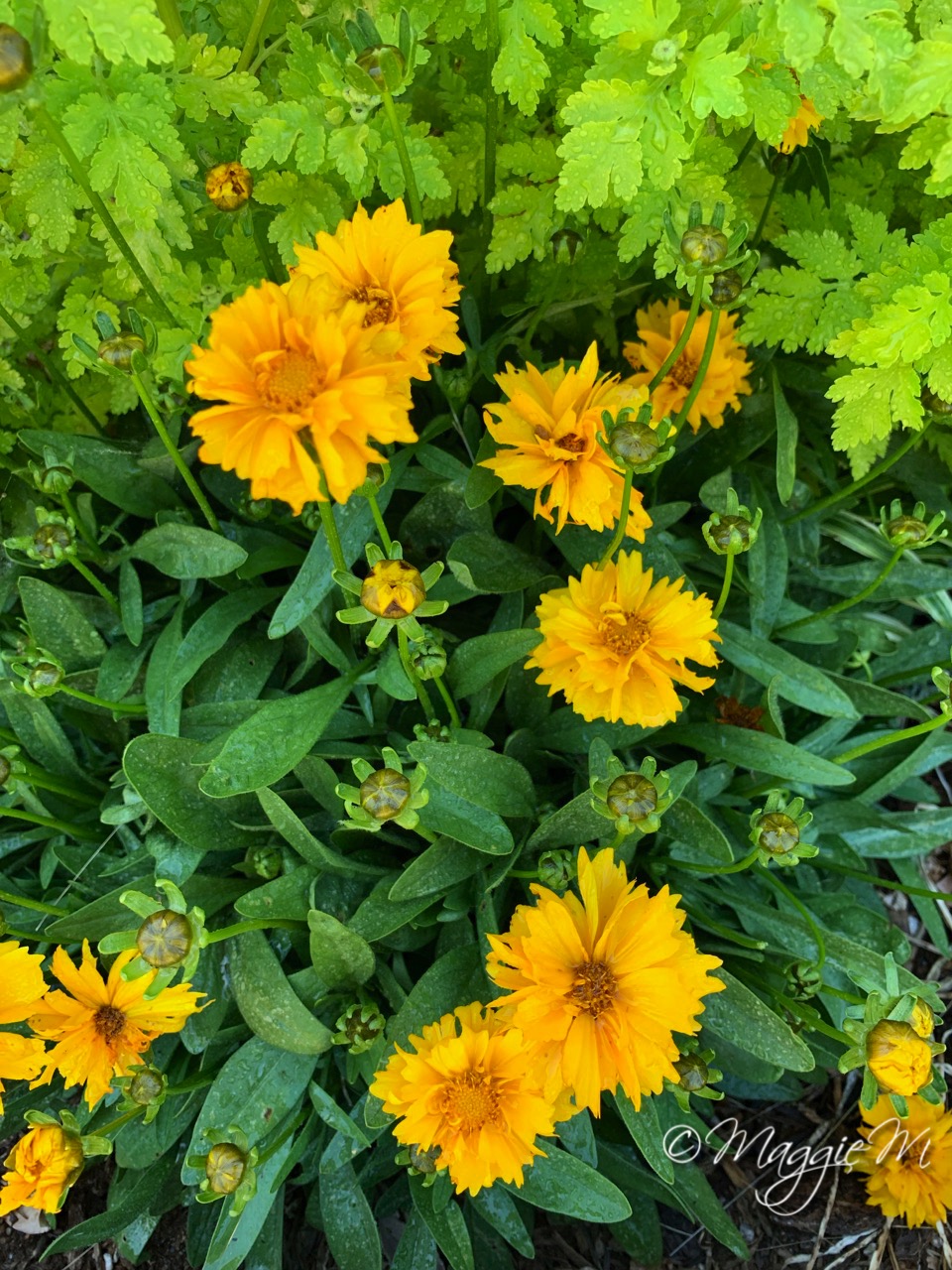
Coreopsis are one of the plants that thrive in my location. I mentioned the very dwarf Presto in my last post. The taller single variety Coreopsis Sunburst (below) blooms a few weeks ahead of the others so I keep a few clumps in the back of the beds to satisfy the early pollinators. The compact Early Sunrise (above), an All American Selections Gold Medal winner, is another favorite for cheery spring blooms.
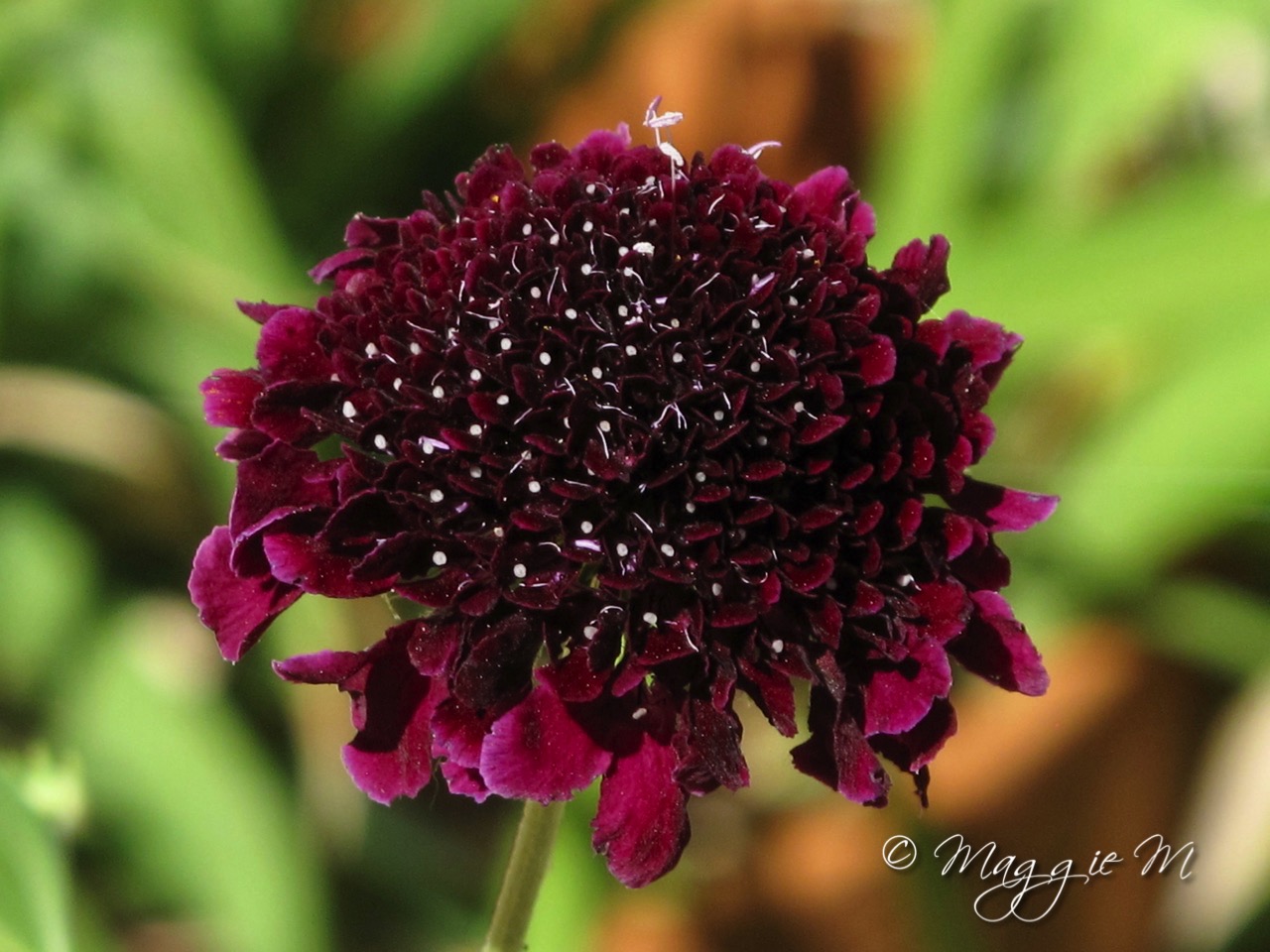
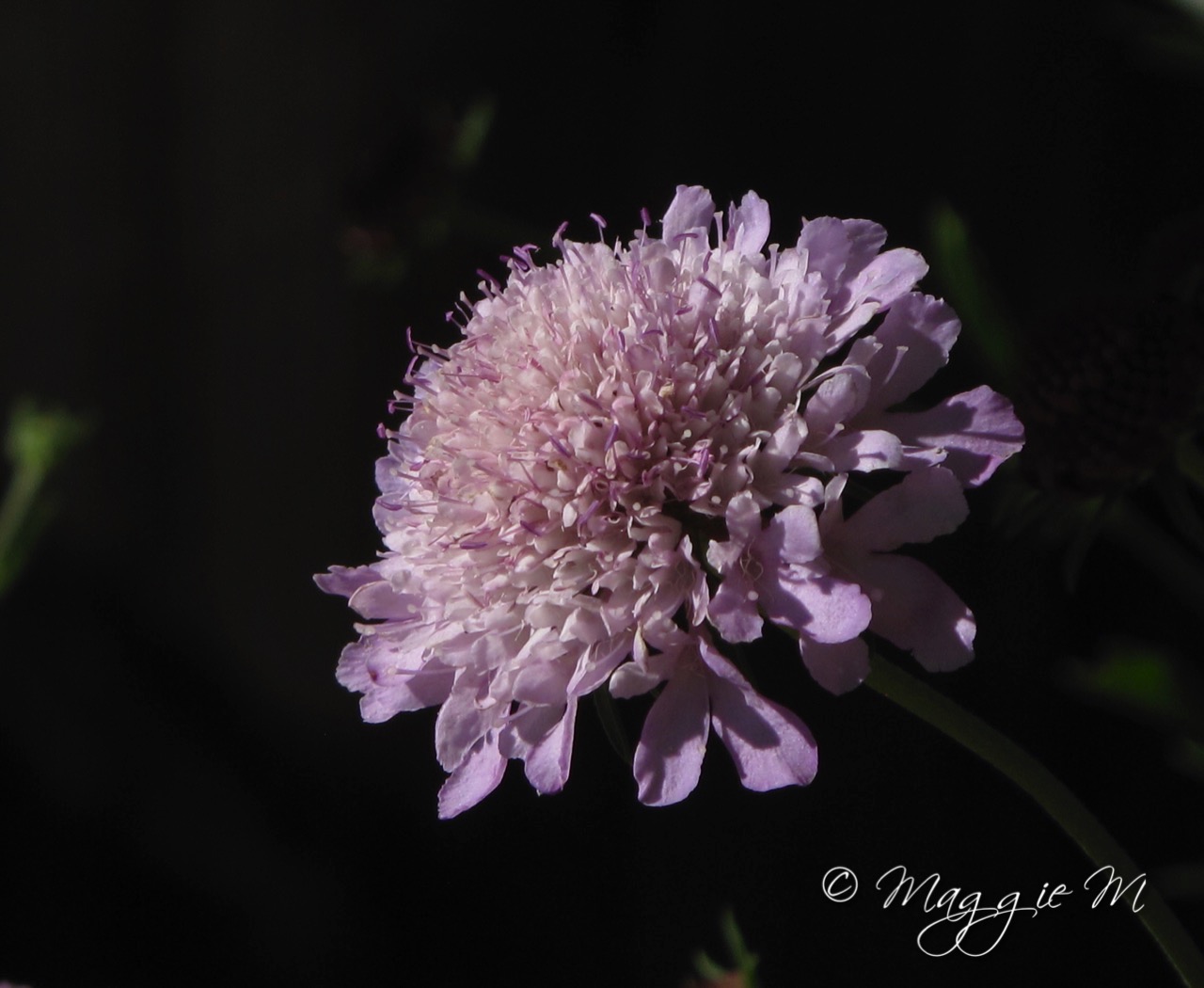
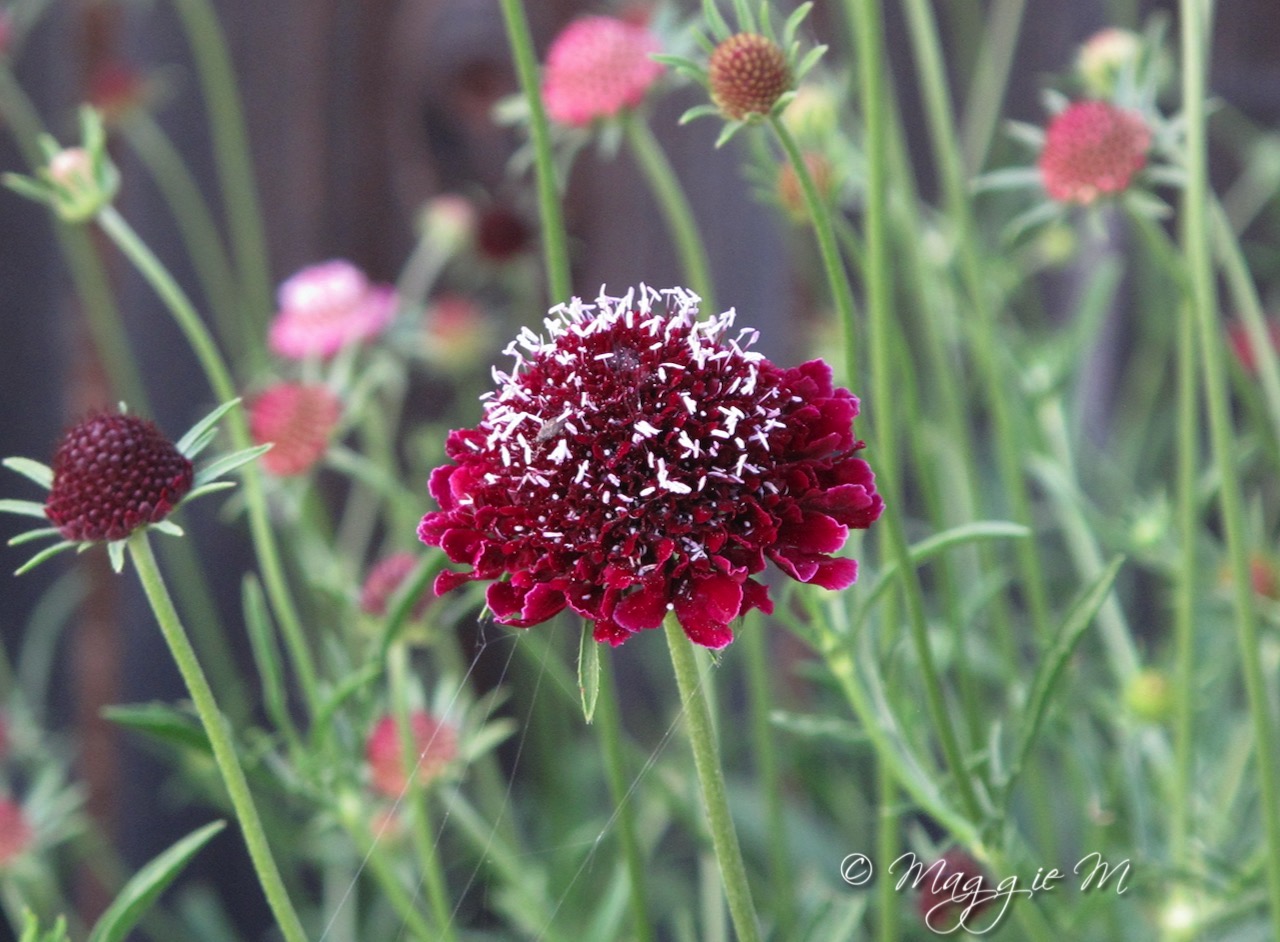
Another early spring bloomer, Scabiosa atrropurpurea (invasive in some other states and countries), is a non-stop bloomer, once it starts just chugging away until a hard frost. Although not invasive here, in an irrigated garden bed, it will happily reseed.
Years ago, I’d bought a flower seed mix called Knautia Melton Pastels – well, Knautia used to be Scabiosa, but it turned out the seed supplier had it wrong. They are very close and hard to tell apart, but the seed heads are a tad different and it turns out my mix was burgundy, white and lavender Scabiosa.
The Variable Checkerspot butterflies appreciated the early bloom on them.
Lovely as cut flowers, they keep producing if you keep cutting.
I’ve developed a bit of a rotation with them. They are charming little 1.5 ft tall plants their first spring, expanding to 2.5 ft their second year, and although still quite floriferous at the end of their third year – they’d big and getting woody bases. So I rip those out to feed the compost and sprinkle seed heads to give me more the next season.
Meā culpa, meā culpa, meā culpa …. Yes, I’ve let the blog slide a bit. So, I’ll start with something pretty.
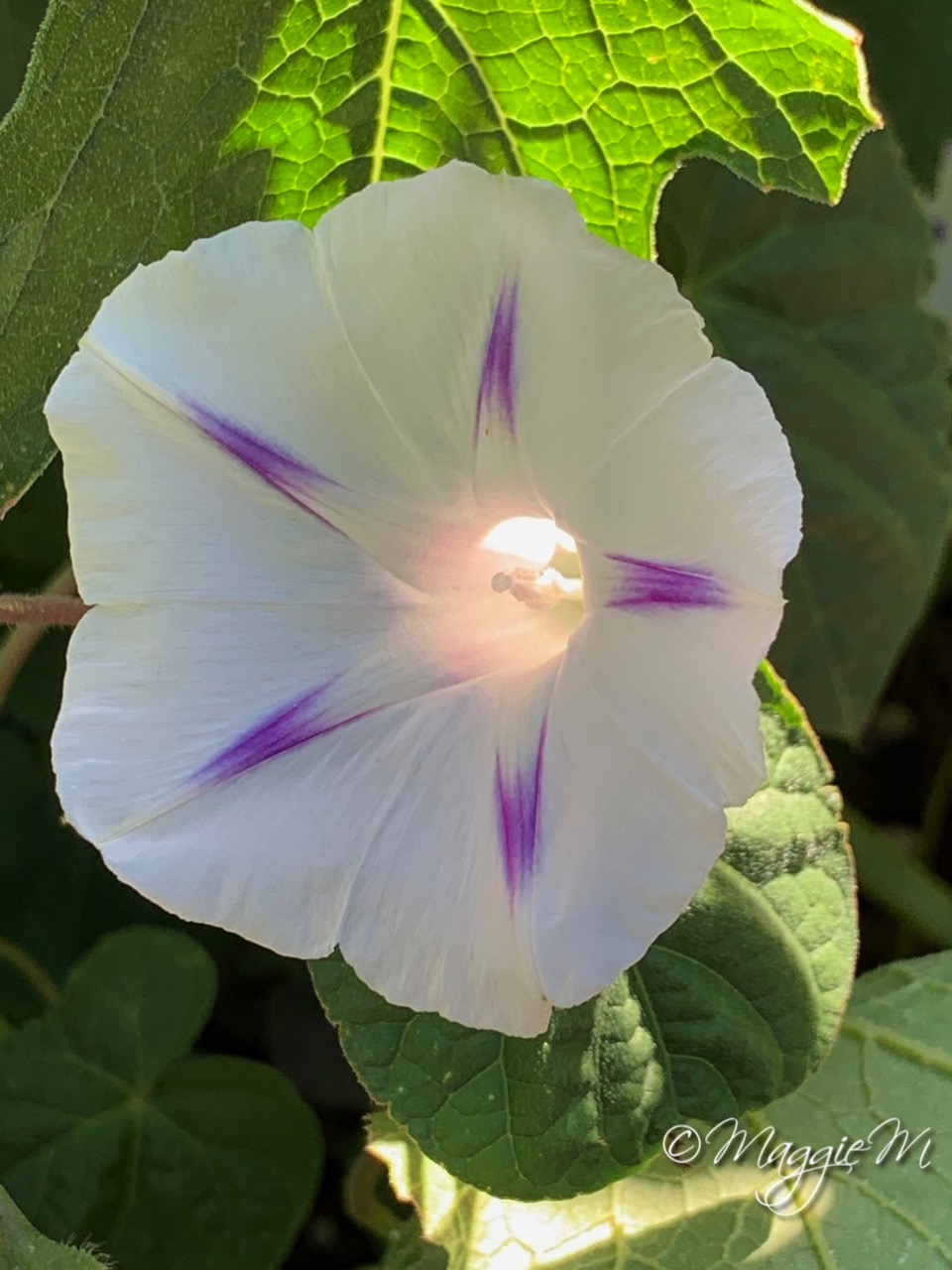
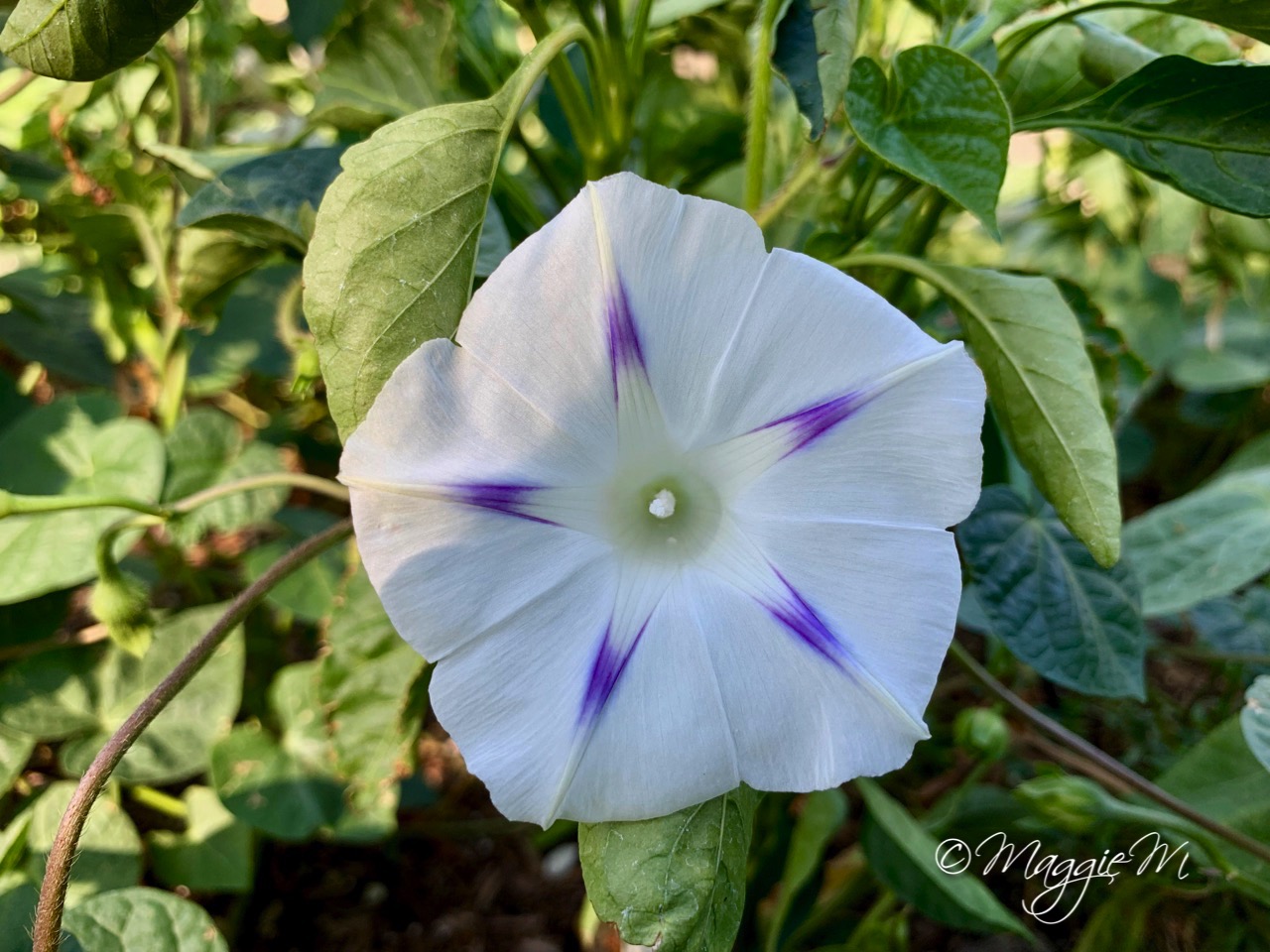
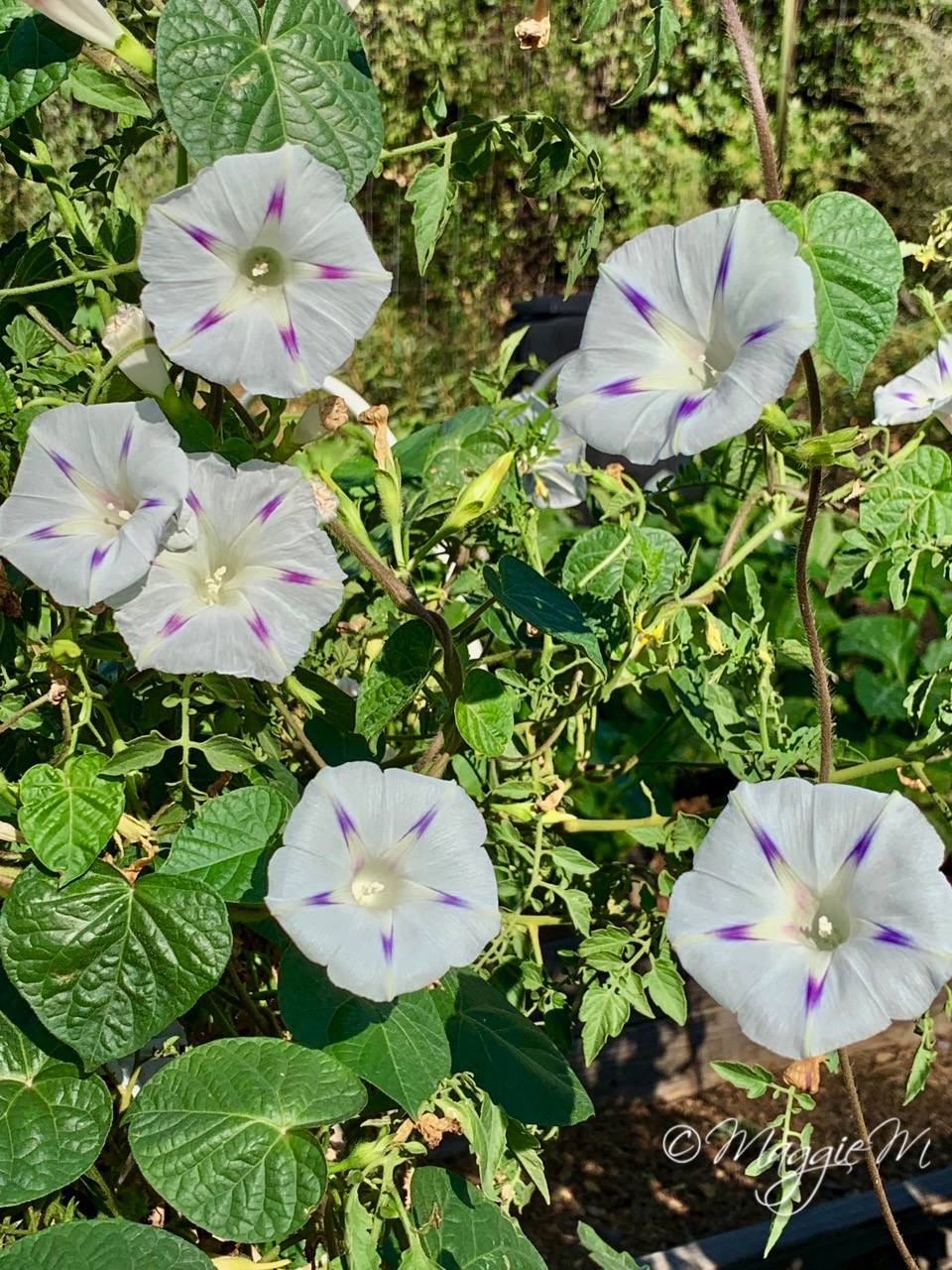
This is Milky Way Morning Glory. The morning light hit it just right (not re-touched!).
I enjoy keeping a few of the vines in my vegetable garden. Always feel that the bright flowers help the pollinators find their way to my beds.
The flower beds were looking good a bit back. Presto Coreopsis, at only 8 inches tall, flowers all summer and is easy from seed to boot.
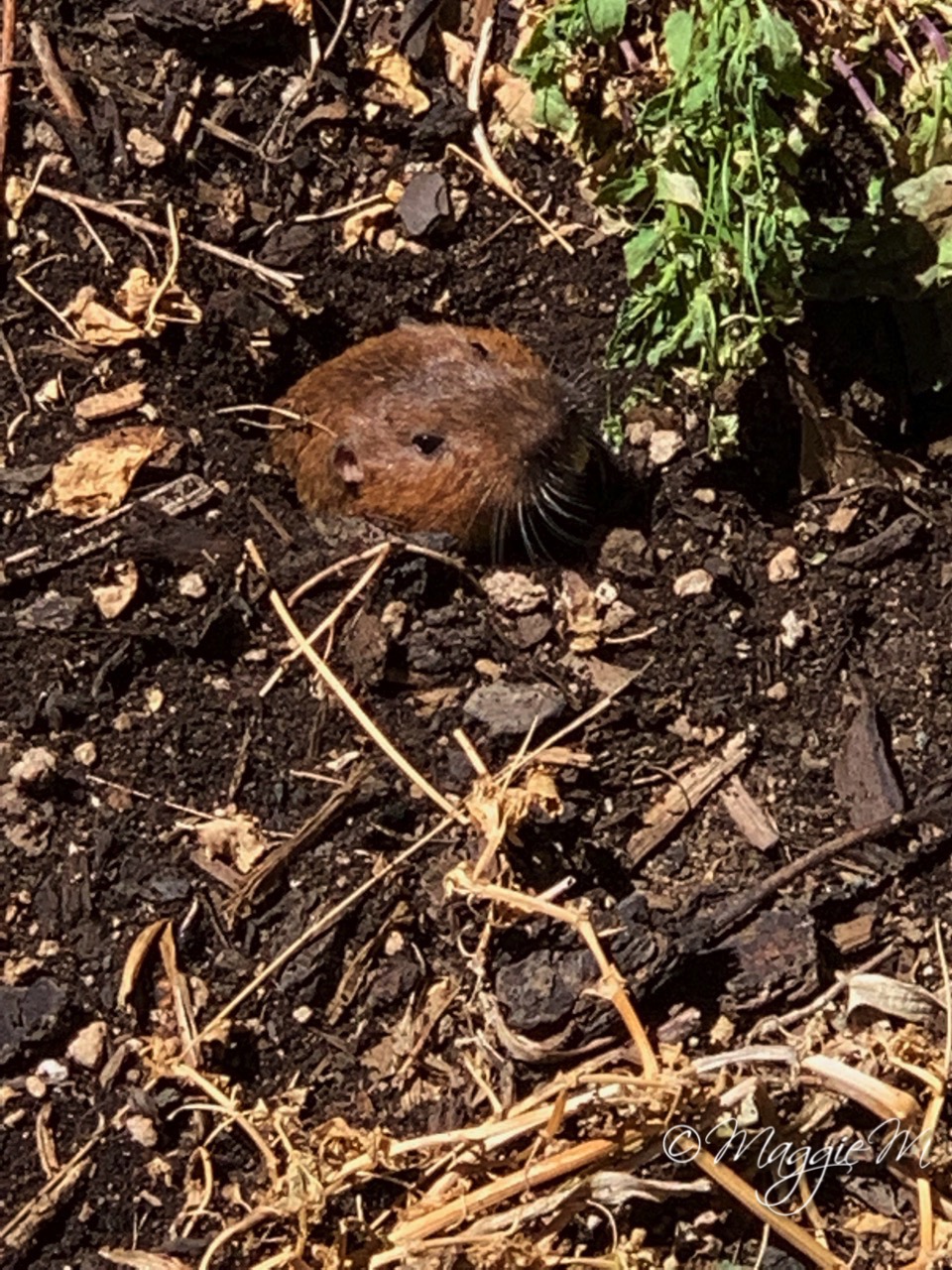
Unfortunately, this guy and his family have moved in and decimated a few beds (pocket gophers). I have a ‘no kill’ garden (sometimes that means ugly plants or dirt). Living on the edge of forests, I’d be killing and removing critter bodies daily if I tried to keep them out. Not my idea of a good time. The voles (tiny meadow mice) are prolific here as well, and quite voracious to boot, Thus every year is an experiment to see what works. Wire under the veggie beds is a huge help, but I think it’s ready to be replaced (ugh!). Purchasing wire gopher baskets can get expensive and building your own takes a bit of elbow grease and patience. So, experimenting to see what survives it is. Usually things look good through spring. I’m accustomed, due to the heat and dryness in addition to critters, to allowing the ratty look come September. I don’t strive for perfection here.
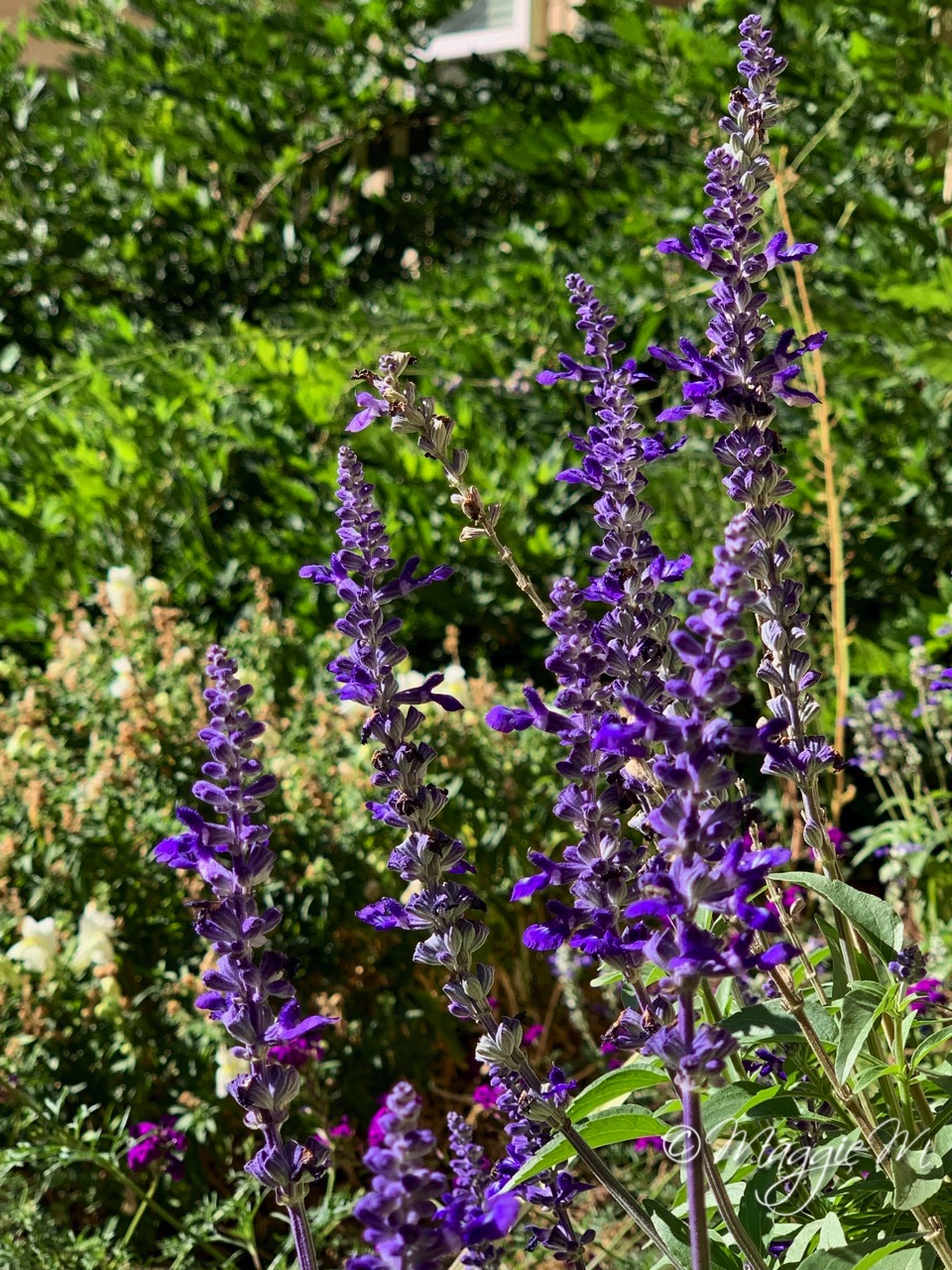
Hate to say what they haven’t eaten as seem to jinx myself and they attack that next – but thusfar Salvia Victoria is looking good.




 ceo a's dhraíocht